I used to take the train from Philly to Baltimore once per week to teach a 3-hour Special Topics in Journalism class. I was filling in for a pretty well-known person, the university’s Journalist-in-Residence, and it paid $5000 per semester.
I bought 10-packs of tickets for $400 per set, three times per semester, so $1200 total. After that and taxes, I pocketed around $2000 for the semester.
I was pretty pleased. I had a full-time newspaper gig. This was bonus money, and it helped me gain experience that I wanted to parlay into a full-time teaching gig someday.
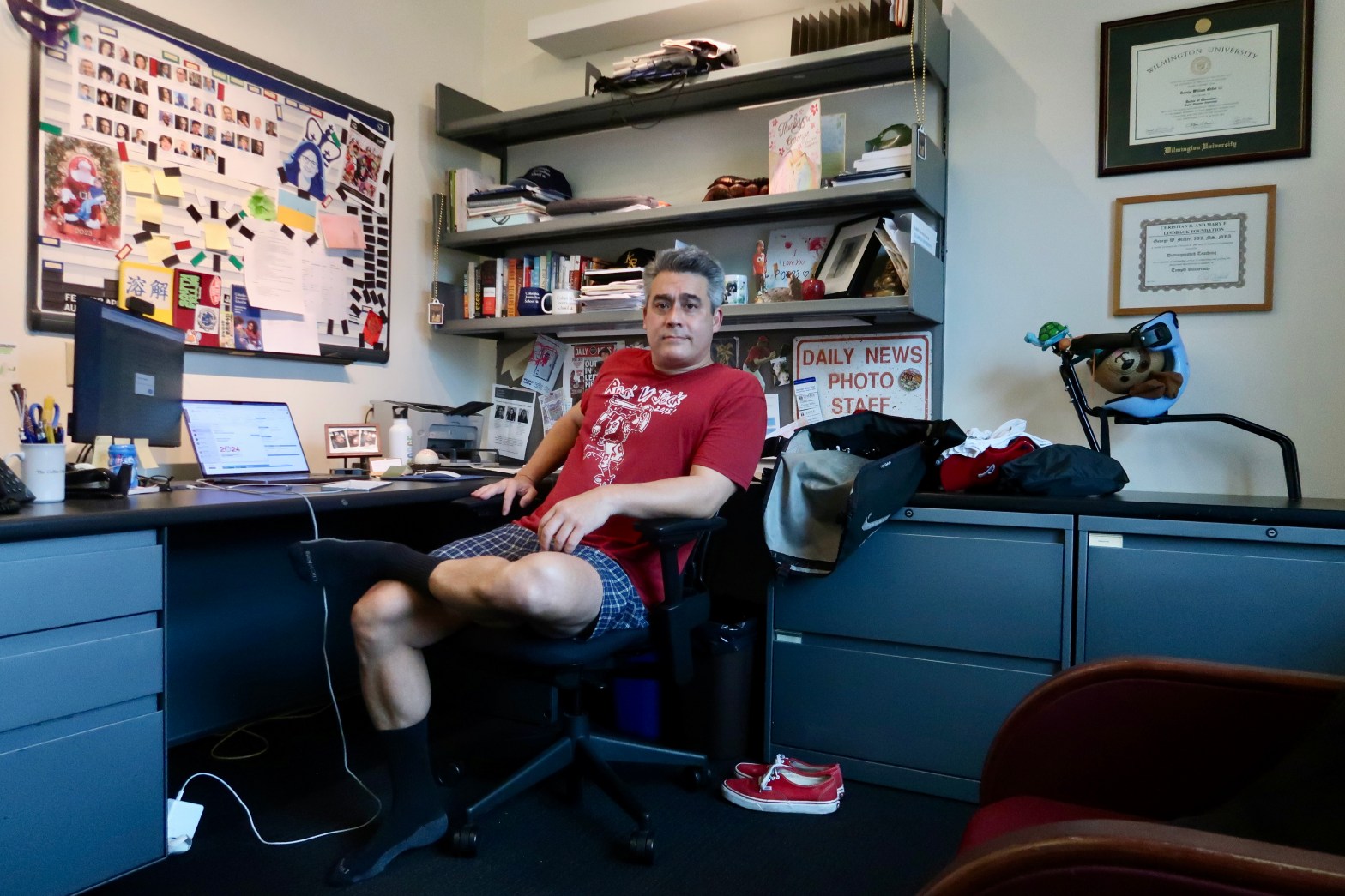
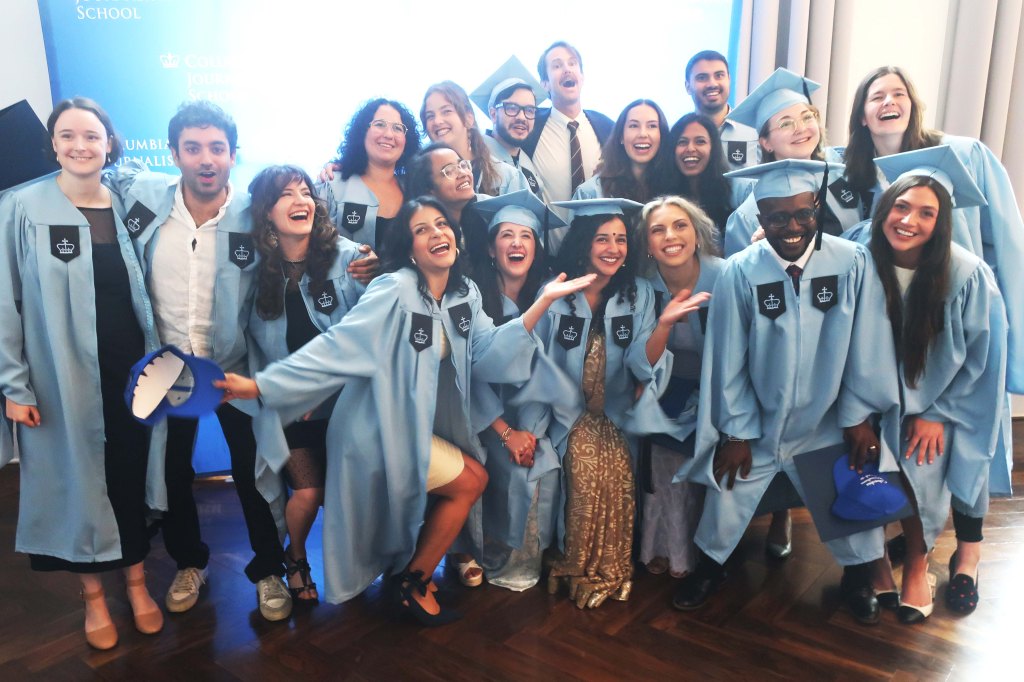
The guidance for teaching the class? Almost none. In classic Andy Ciofalo (pictured below) fashion, he told me to figure it out.
I had no idea that Special Topics meant I should chose one topic and focus on that. Instead, I put together a complex syllabus that spanned a wide swath of ideas and and journalistic styles, from crafting ledes to writing longform narratives. I designed a printed reading packet that was probably 300-pages long, including passages from Haruki Murakami, Susan Orlean, Roger Kahn and more. To assess their learning, I had the students do journalism.
I think it went well but I’m not sure. I probably saw the student feedback but I don’t remember it. I’m still friends with one of the students. I could ask her but, gosh, I wouldn’t be surprised if she said the class was a shitshow.
That adjunct life can be a wild ride.

I’ve been hiring adjuncts for about ten years now. I talk them through the money stuff and all the other logistics, of course. But I really try to emphasize pedagogy. The most important thing is what happens in the classroom. What are the objectives and how do we know if we achieve them? What can you do to be successful as a professor?
When I moved from industry to the academy full-time, I attended a week-long workshop at the Ernie Pyle School of Journalism at Indiana University designed for journalists transitioning to higher education. It was ridiculously valuable.
That program no longer exists (nor does the Ernie Pyle School). So here are my tips for journalists who want to teach.
Understand the students.
In order to reach your students, you need to know who they are, and what they already know. What are their experiences? What classes have they taken?
That will help you develop your starting point. You need to establish a foundation.
Teach to the best, support the rest.
Students come into classes at varying levels of knowledge, experience and understanding. It can be difficult to teach when some people don’t know basic concepts, and others are ready for the next level.
My suggestion? Teach to your highest expectations of what the students can accomplish in your class. But also build support mechanisms for students who don’t know the basics. Provide resources – primers, tipsheets, links to further information, books, etc – that the students can lean on so they can get up to speed.

Build a comprehensive syllabus.
I always tell people that having a solid syllabus is just as helpful for professors as it is for students.
A good syllabus explains the purpose of the class, the course objectives, the assignments, university policies and the schedule for the term. Basics, you know?
A good syllabus shows the student how they can succeed. What are the expectations and how do I meet them? A good syllabus provides a path for everyone, and we’re all on the same page.
For faculty, a comprehensive syllabus helps you plan and execute a system of learning that builds from class to class (see more about scaffolding below). It gives you a document that you can lean on when students push boundaries. It helps you stay organized, which can be massive when you – like me – have a gazillion things going on.
Use the learning management system.
Students want information when they want information. When questions pop up, they want answers. What was that concept we discussed in class? They can email you or you can create a process for them to continue learning on their own.
Post the syllabus and lecture notes, tipsheets and style guides. Provide links and PDFs for class reading and links to further resources.
It can be a pain to set up a good Canvas/BlackBoard/Moodle/Google Classroom/CourseWorks page. But that page provides a database of information that can continue the students education beyond your classroom. A well-stocked and tightly organized learning management page can multiply your impact.
Think about this: We live in an age when individuals are in control of their information intake. When we are curious about things, we search. Students are no different. We should encourage their exploration and help facilitate it.
Make lesson plans.
I used to type up my lesson plans for every class – topics we’d discuss, exercises we’d do, reminders for upcoming reading and assignments, etc. That way, I had a game plan for the session and I never missed anything.
I still go through that process but now I do it more visually.
Use slides.
I make PowerPoint slideshows for every class.
They usually start with a question from something in the news – an ethical dilemma or a curious moment. Then I present the agenda for the day, followed by images that represent the discussions we will have that day. There are questions weaved throughout.
I end with takeaways from the day, and what students need to know about upcoming readings and assignments.
Engage students in their learning.
It’s great to hear a war story every now and then but if you just want an audience, create a YouTube channel. Classrooms are not the place for you to blabber on and on about your career. There is a purpose to this.
We want students to be active participants in their education. Present concepts and ask students to exemplify them. Put them to work. Ask them questions. Have them apply the knowledge you are providing them.
This likely seems so obvious. But I’ve seen way too many people stand at the front of the room and orate.
I am not saying that lecturing is bad. But we need to know if the ideas are sticking. This is especially important in something like journalism, which benefits from experiential learning.
Practice, make mistakes, learn from them and improve.
Scaffold learning.
The purpose of your class isn’t to get the students to your level. It is to prepare them for their next level. Understand where they are from and where they are going, and get them ready for that.
That goes for each assignment in your class, too. Each assignment isn’t supposed to be the end-all, Pulitzer Prize-winner. You should build from assignment to assignment, with students pushing farther at each level.
In Philadelphia Neighborhoods, for example, we used to do an exercise where students created wide shots in video that introduced us to their interview subjects. Then we’d see a medium or close-up shot, and we’d start to hear the voice-over. Then we’d see the interview headshot. We’d continue hearing that person as the video went to a medium and then wide shot.
It was just a 20 or 30-second video exercise but if you piece three or four of those segments together and add some b-roll, you have a basic news package.
We also had assignments go from listicles to Q&As to brief multimedia packages to complex multimedia packages. Each assignment provided skills (and feedback!) that helped students prepare for the next assignment.
We scaffolded learning so that there was constant growth.

Feedback.
At that workshop at Indiana, one of the professors showed us a student assignment that had a professor’s notes scrawled all over the pages. There were even a few diagrams and lots of lines and arrows. I think the ink was red, too.
The professor said, “Don’t do this.”
Not only is it discouraging to students, it’s just not helpful.
Line edits can be very important but save that for the end of the term. For early assignments, provide notes about what is working and what isn’t. Think big picture rather than micro-level. That will save you lots of time and it will be more beneficial to the students.
Rubrics, rubrics, rubrics.
How do you create rubrics for subjective work, like writing magazine stories?
I built rubrics around the course objectives, which included: Finding a story worthy of a narrative treatment, building characters, creating scenes that evoked emotions, providing background so that readers understood how we reached this point, and telling comprehensively-reported stories that were entertaining as well as informative.
My rubrics also have slots for grammar, punctuation and other technical stuff.
I even had points assigned to each category, as that helped me weight the things I thought were most important.
In more recent years, I’ve shared the rubrics with students at the beginning of the semester. Originally, I didn’t do that, as I feared students would craft to the rubric. But I found that presenting expectations early greatly helped the students. I’m sure a few people here and there wrote to the rubric but everyone has to start somewhere.
Building relationships.
The best part about teaching is watching students grow. They evolve over the course of the semester, and over the full time they are in your programs.
This summer, I taught an ethics class and at the core was the question of journalism’s role in preserving democracy. At the start of the semester, almost everyone was like, “Dude, we need to abandon objectivity and advocate for democracy.”
By the end of the semester, the students almost unanimously said that the principles of objectivity were necessary for the preservation of democracy. It was a pretty dramatic turn. I didn’t lead them there. I just played devil’s advocate a lot, and challenged them to form their own opinions.
It was a blast getting to know the students – one is in an indie band, another works for a right-leaning news org. One of the students has a background in community activism. Such fascinating people!
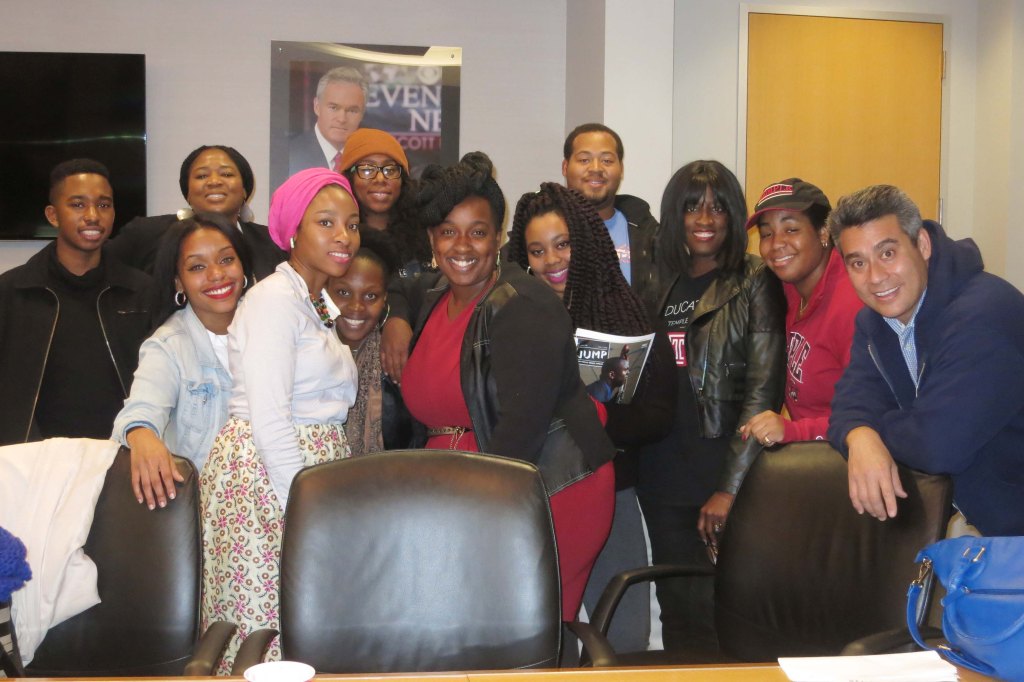
These people don’t leave my life. We will always have these shared experiences, and we can always communicate going forward. I treat my students like the future colleagues they are. There is no hierarchy. We learn together.
I’ve stayed in touch with so many or my former students, and I’ve taught more than 5,000 over the past 20+ years. Building these relationships has been the very best thing about teaching.
Away from and after the class.
Everyone needs office hours, a few hours every week during the term when students can connect for one-on-ones, whether in-person or virtually.
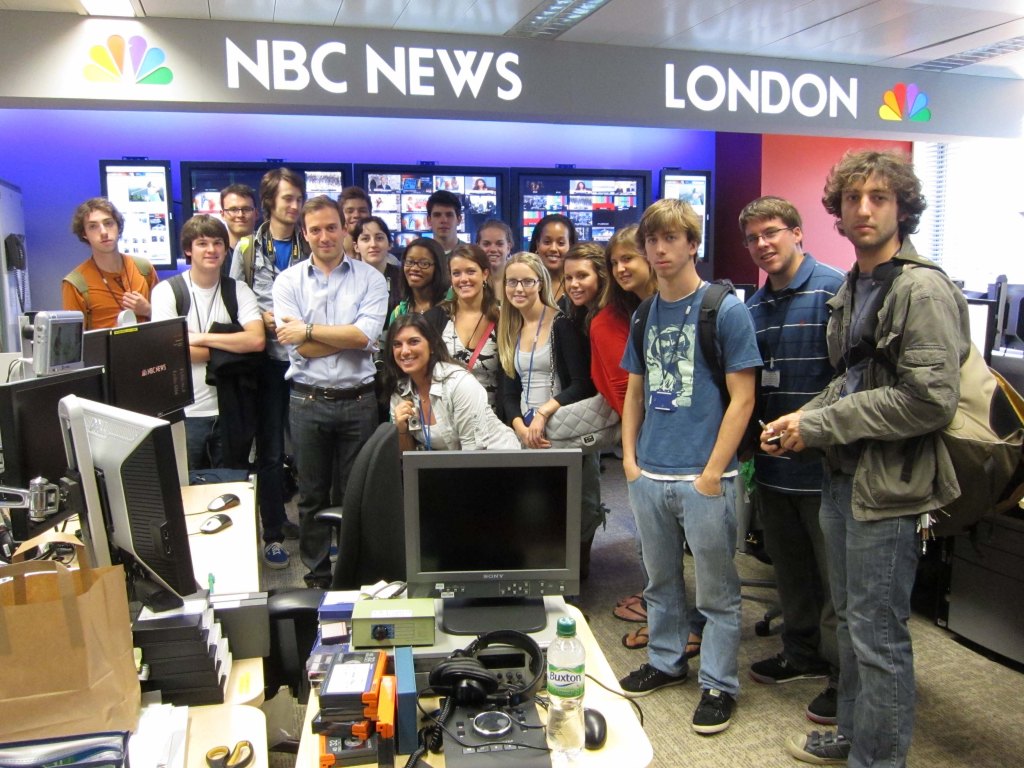
Being a professor means more than class time and office hours, however. It means being a part of the campus community, and the campus life.
Full-time faculty, should attend events with students and participate in university activities.
For adjuncts, it’s kind of a perk. You aren’t getting additional compensation to do this other stuff but it’s so rewarding to become a part of the students’ lives. They lean on us, and we help them – outside of classes, after semesters together, and after graduation.
Credit hours and expectations.
A one-credit class should meet for about 12 to 15 hours total during a semester. A 3-credit class should meet between 36 to 45 hours. A 6-credit class should meet between 72 and 90 hours per semester. It does not matter whether the semester is 2, 7, 14 or 15 weeks long.
Why does that matter? It establishes the work expectations of the professor, as well as the students.
Professors should expect to spend double or triple the amount of time on grading and preparation as they spend in class, so you’d have two or three hours of prep/grading for every one hour of teaching time.
Students are expected to put roughly the same amount of time in class prep – reading, writing, other homework, etc. So, if a student is in class for 3 hours per week, they should be doing prep for 6 to 9 hours per week.
You still want to be an adjunct?
These days, I usually meet with a handful of people every week who inquire about adjunct teaching positions. It was way more when I first took my current gig. I’ve learned I need to manage my time better, and their expectations.
Some of these conversations, however, are fascinating – these are usually highly accomplished people. Generally, I know what they will say – they’ve had amazing careers and they want to give back to the institution that was so beneficial to them. They think teaching will be rewarding, and a way to help the industry going forward. Or they are winding down their careers and they are looking for next steps.
I listen for two things: An understanding of the evolving world of journalism, and teaching experience – or at least an openness to developing pedagogy that scaffolds learning.
I look for flexibility. I need people who can teach multiple things at once.
And when people are arrogant or entitled, I dismiss them. Same with the bloviators. We need student-first instructors.
Adjuncting is a side-gig. It should not be your primary source of income.
Adjuncts make terrible money in comparison to the full-time faculty. That is a reality that will not change.
You should never build a career around being an adjunct. It’s not stable work. It can be frustrating not getting classes, not getting paid what you are worth, or not getting the respect you feel is deserved.
Being an adjunct should be a side hustle. It’s a little extra cash and an amazing experience. It can be a great foundation for a freelancer, as it provides a regular paycheck and library access. It’s also a way of learning about an industry that you might want to enter down the road. Higher education is an unusual beast.
You want to be a full-time professor?
In theory, being a university professor is a grind. If you are teaching 2, 3 or 4 classes per semester, dealing with 40 to 80 students at a time, it’s a lot to organize and stay on top of. I used to have around 300 per semester. It was brutal, just constant motion. Prepping and grading is time consuming. Getting to know that many people is difficult.
This is why it’s so important to craft a comprehensive syllabus. It will be invaluable to everyone during the semester.
Most universities assign four classes per semester to non-tenure track faculty, and two to tenured or tenure track professors.
There are usually school or department committees, university-wide committees and other pseudo-administrative responsibilities. These are generally not a lot of heavy-lifting. Faculty meetings can be important for many reasons, though they are usually just a time to update everyone on stuff. Big changes take a long, long time, and it can often feel like changes never happen.
Most faculty disappear after spring graduation, not to be seen until fall semester prep begins in August.
I guess it’s not a bad life, really.
Be aware: Being an adjunct is not necessarily the path to full-time teaching. It can be, but don’t bank on it.
Understand the university, college, school, program and/or concentration.
If you are interested in working in higher ed, learn the landscape of the places you want to teach. Is it a liberal arts school with a few journalism classes? Is it a state school where the journalism classes are offered in the broader communications context? Is it a professional school, like Columbia‘s, training people for industry?
This helps determine the types of classes offered and needed. Professional schools require hands-on education. Liberal arts and comms programs usually have a combination of theory and skills classes.
Every program is different. Find the university bulletin and study the curriculum of the programs you are interested in. See what classes are mandated, and what electives are offered.
See where you might fit into the equation, and be creative. Don’t just identify courses you’d be qualified to teach. Think about potential new classes that revolve around your expertise and see if they could fit into the existing system.
Learn who the players are.
Just like you wouldn’t pitch stories to station presidents or editors-in-chief, you don’t want to reach out to deans for teaching gigs.
There are different types of deans – researchers, teachers, fundraisers, community-builders, and combinations of all of the above. Their level of involvement in curricular matters varies widely. But the big deans generally don’t handle the day-to-day stuff, like putting together schedules and hiring adjuncts.
Browse through journalism department faculty web pages and look for people with assistant dean, chair, director or coordinator titles. Those are likely the folks who make things happen.
Postscript.
I had one semester when I served as an adjunct at three different universities. I had just taken a buyout from the newspaper where I had worked for 12 years, so I was sitting on cash and time. I taught for the experience – and because the people who hired me had been wonderful mentors. They gave me opportunities, so I did whatever they needed.
I shuttled between a mag-writing class in Maryland, a photo class in Delaware, and a basic newswriting course in Philadelphia.
I was freelancing a ton then, too.
Teaching made my writing and photography better. I had to apply all the ideas I offered in classes or the students wouldn’t believe me. Really. They’d often challenge me, which I loved. I had to be a solid journalist.
My teaching benefitted from the field work, as I brought all of those experiences to the lessons. Everything the students were doing for their homework assignments, I was doing too.
Until I did my doctoral program, and then became a parent, I balanced teaching and practicing journalism. It was an absolute blast.
I hope to get back to that rhythm again soon.
 G.W. Miller III
One thought on “Future Colleagues”