
Back in 2007, during my first semester teaching the 300-student Journalism & Society class, I invited two journo friends to talk to the students.
Josh Cornfield, then a hotshot young reporter covering city politics for The Metro, arrived on time and kindly responded to countless questions from me and the students. It was great. He grew up in Northeast Philly and graduated from Temple a few years prior, so he easily made a connection.
An hour into the 80-minute class, Jonathan Valania, a longtime music critic/reporter/culture blogger, burst into the room and asked what the students were majoring in. When a majority said they were majoring in journalism, he responded, “That was your first mistake.”
He spent the remainder of the class telling students that they should become experts in other areas and maybe take one reporting class, and that would be enough for the to become successful in journalism, if they so desired.
That started a discussion in class that lasted the rest of the semester and has continued in my mind for the past 14 years. Do people need to be journalism majors to become journalists? Should anyone be a journalism major anymore?
And the bigger question: What is the role of a journalism program in this day and age?
You could have asked those questions at any point, really, but the last 20 years or so have seen rapid changes.
By the time I started teaching Journalism & Society, the industry was already hurting. There was a website that documented the near daily announcements of layoffs at newspapers. Magazines were losing ad revenue and many were closing. TV news outlets – at the local and national levels, were reducing their reporting ranks and filling the constantly expanding air time with talking heads. Radio was becoming the niche medium that it is today (podcasts!).
People were championing the power of the Internet despite the fact that there was no viable business model for smaller news outlets (ie not the New York Times or Wall Street Journal).
And then, a few months later, the global economic crisis made everyone tighten their wallets. Advertising disappeared. Hiring halted, and a generation of graduates had difficulty finding work.
You could understand why people would question being a journalism major.
The need for trained, ethical journalists with an understanding of the business as well as an appreciation for people and cultures, however, was massively important. So was the need for everyday people (ie non-journalists) to understand how information was developed and curated.
We were at the dawn of fake news and the rise of social media. The notion of a Black president inflamed a segment of the population, sending the then-waning Culture Wars into overdrive. The journalist as celebrity was peaking.
If only we had bolstered the ranks of journalism rather than depleting them, maybe we wouldn’t exist in a world where people don’t believe science and proudly proclaim as much.
More on that later.
During the 10.5 years that I taught Journalism & Society, I had three main objectives:
• Make it participatory,
• Make it valuable to people who had no plans to enter journalism, and
• Try to be realistic for the people who intended to become journalists.
I think we had more people talking during class sessions than you would normally find in such a cavernous room. And we continued conversations on the class blog.
I brought in four or five guests every semester, with people coming from a variety of places – broadcast news, documentary filmmaking, the sports world, academia, public relations, municipal government, etc. I tried to have a mixture of veterans and newbies, established media types and next-gen folks, die-hard journalists and the people who are covered frequently in the news.
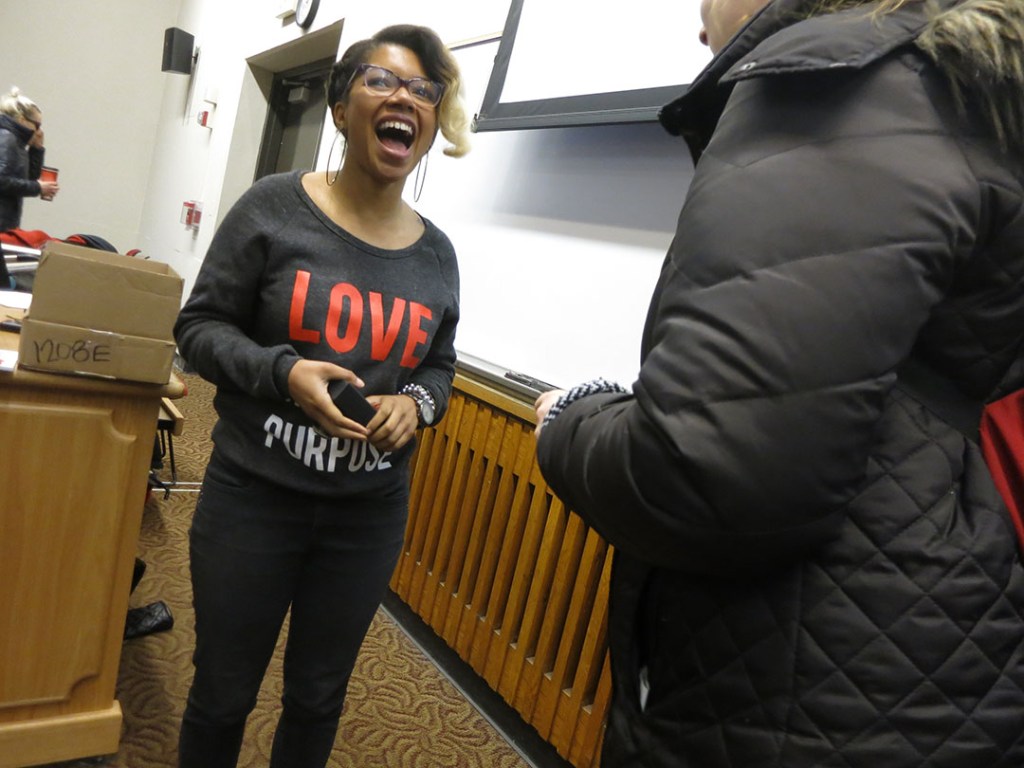
These folks shared their paths and experiences, presented their opinions about media and communication, and offered advice for the students. Most guests stuck around and talked with students, even posing for pictures.
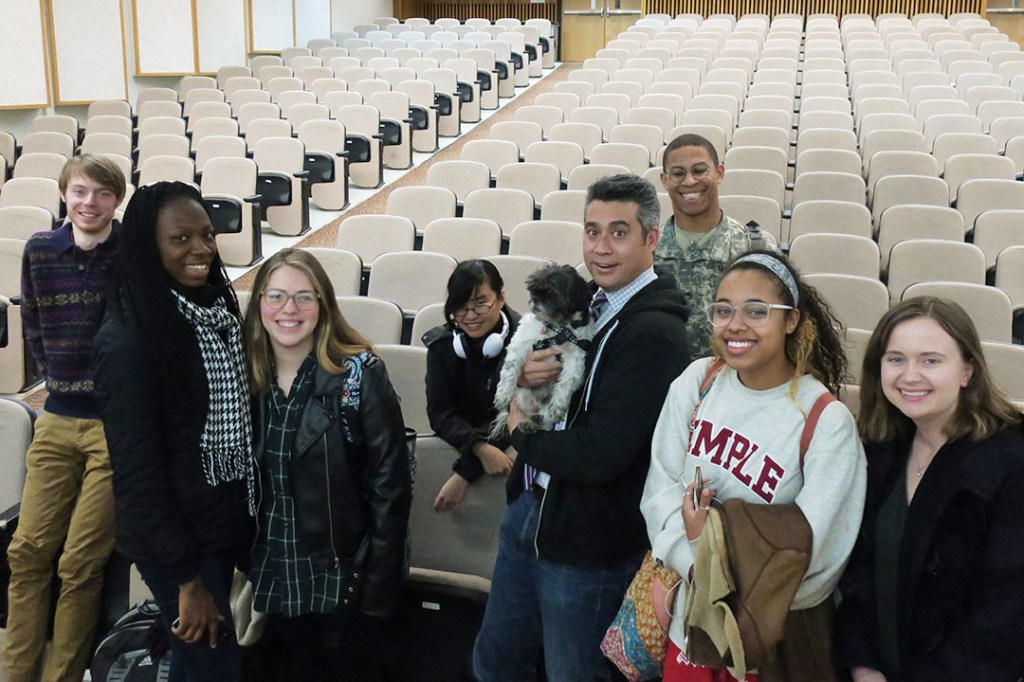
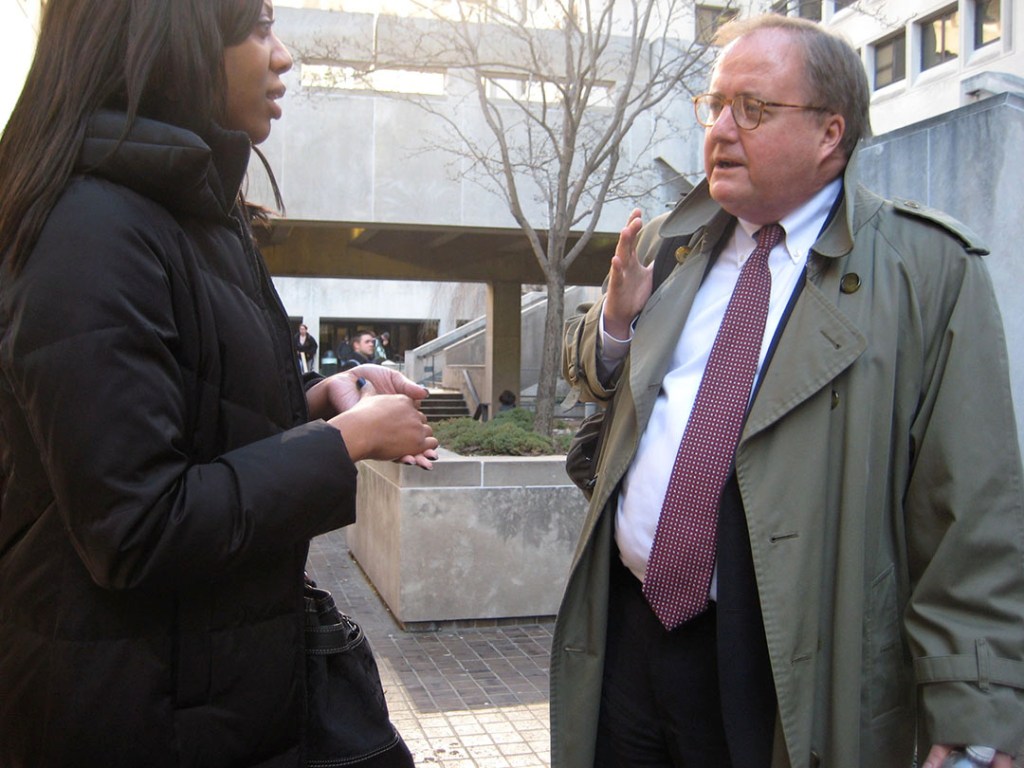
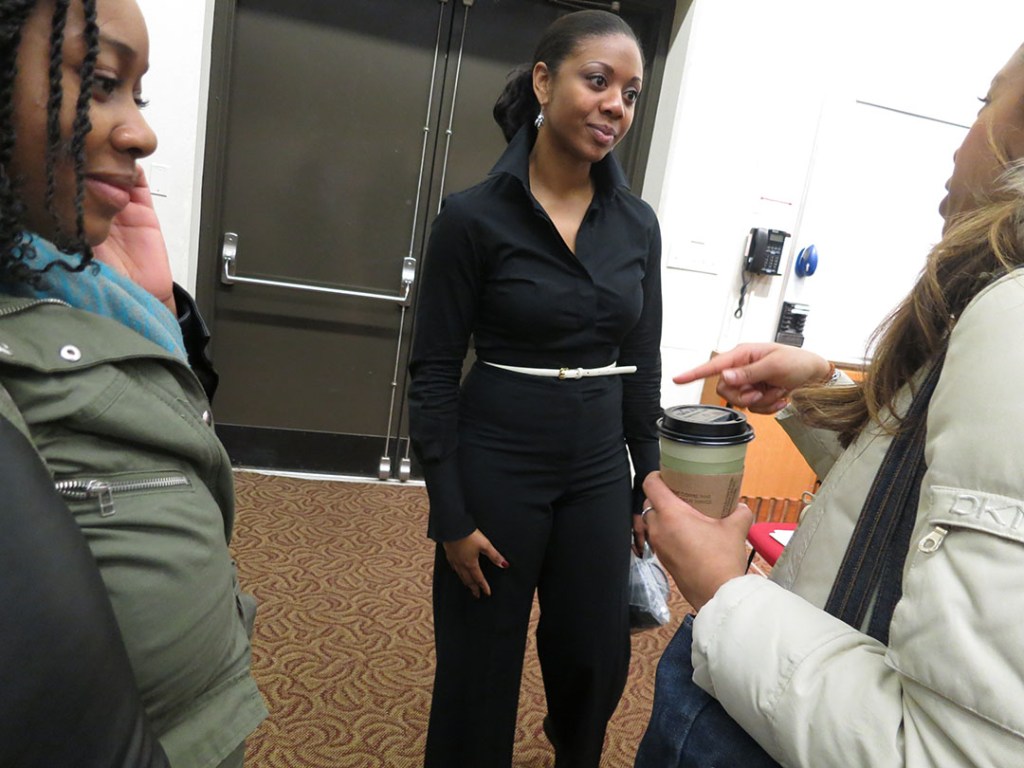
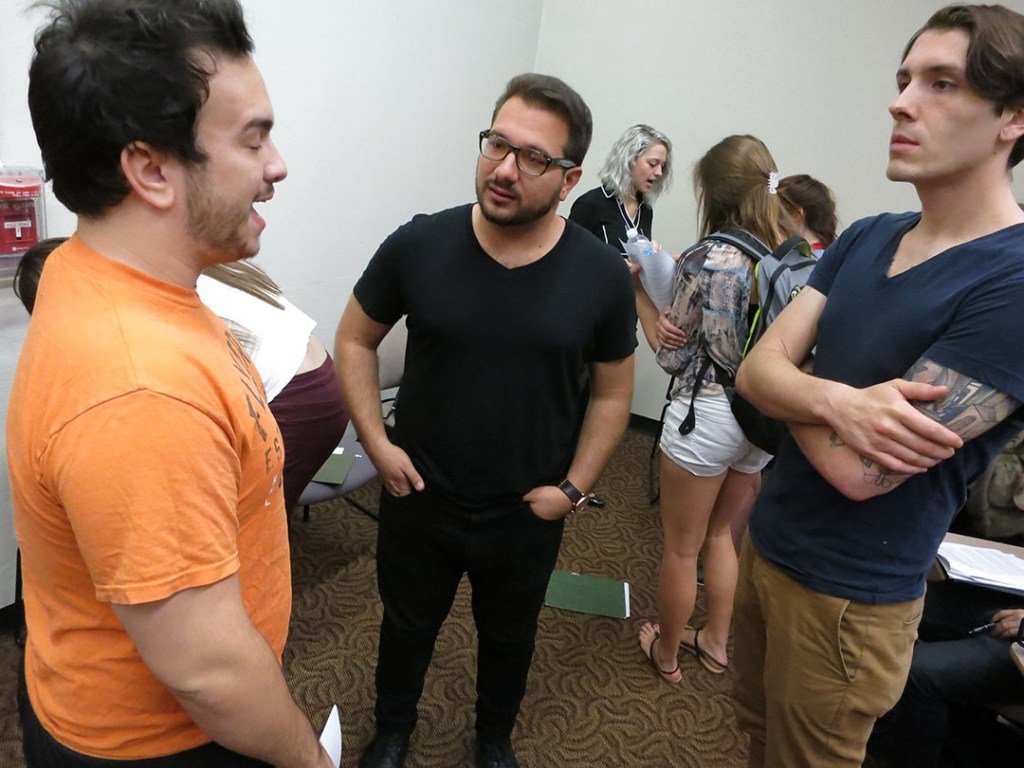
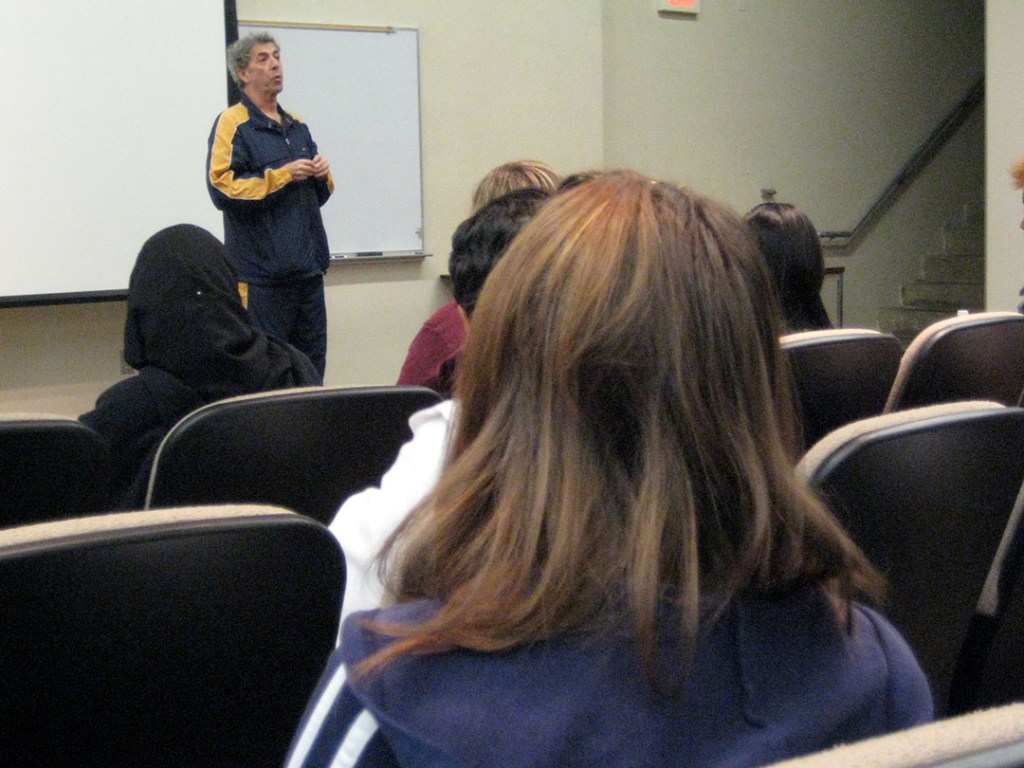
(Fun fact: all of the images in this post are of guests when they visited my class).
The guests provided context for the big picture ideas I shared, which largely revolved around two questions: What is journalism, and what is the role of the journalist in society?

Ask those questions today and you’ll often get snarky answers, like journalists are liberal propagandists, or they are media elite trying to make a profit. They are funded by George Soros, they promote pedophilia, and they want the government to take away your guns and money.
Newsroom layoffs, cutbacks and job consolidations over the last 15 years meant that fewer stories were being covered, so people often didn’t see themselves or their communities adequately represented in the mainstream media.
They found like-minded people online, however, and the ecosystem of shared information became very powerful. Evil forces found that uninformed people could be swayed by bombastic, emotional stories about the hated political elite. The credibility of all news sources has been undermined, leaving us in a time when the loudest idiots can become the most powerful influencers.
It makes me feel so hopeless for the country, to be honest.
At the same time, it makes journalism education all the more important.

I wanted the students to understand the impact of the media, so I often brought in politicians and other newsmakers, as they were on the other side of the equation. Journalists tried to tell truths and the story subjects were not always appreciative.
That matters.
The journalist’s job isn’t to please or promote the story subjects. It is to inform the public so that they can make wise decisions in life.
But if a story subject feels betrayed or poorly represented, they could start a low-level campaign against the media, or they might stop talking to the media all together.
When former Philadelphia mayor John Street came to the class, he would not respond to my questions because he thought I had a bias against him. He said that in an email and reiterated it in class.
The challenge for the journalist is to be fair, presenting factual information without bias or judgment. The reality is that we pick what facts to share, and choose we what stories to cover. It’s hard to eliminate subjectivity, so it’s good to understand the perspective of those being covered.

One of the big things we learned while doing JUMP was that the relationship between the journalists and the subjects should not be that far removed. In theory, they should be of the same community, with similar missions and goals.
If we are supposed to be providing a service to the community, we should be in touch with the community, giving voice to their concerns, championing their victories and analyzing their failures.
Due to the transient nature of journalism, that has not always been the case, especially in TV news, where the path for career advancement is usually from market to market. In such cases, new reporters are constantly parachuting into new communities.
Cultural sensitivity needs to be taught and the reality is that the news orgs are so bare-boned that most don’t have the capacity to do that.
So it falls upon journalism education.
What is the role of a journalism department in this day and age?
I think it is threefold:
• There should be general journalism literacy training for everyone who attends college,
• There should be proper journalism training for students who aspire to work in journalism-adjacent industries like marketing, advertising, public relations and non-comm jobs that do a lot of explaining, like education and law.
• There should always be proper, intensive training for future journalists.

Understanding journalism should be a civic duty. You have the right to vote, yeah? You should thus be taught how to critically digest information.
Ideally, everyone gets that info in high school but colleges should mandate it as well. Basic journalism literacy is just as important as science, math, the classics and other disciplines taught in college cores at campuses around the country.
This is really journalism education in service of the community. We all benefit when society is properly informed.
And it would help solidify the underlying mission of journalism, which is to be a champion for the people.
While everyone should take at least one journalism literacy class, I’d suggest people in journalism-adjacent industries should have a more firm grounding in journalism production, ethics, business and technology.
Having that understanding will help public relations professionals better represent their clients, and help marketing executives craft campaigns that are more effective.
And if they concentrate during the ethics training, they’ll better understand their influence and how to wield it humanely.
Does anyone need to be an actual journalism major?
You could get by with that one basic literacy class or the series of classes for the journalism-adjacent industries, and buttress that with specialized training in the field you want to report on – business, politics, anthropology, whatever. That’s not a bad way of going forward.
But I’d very much suggest the full journalism major.
Most journalism majors across the country require about 1/3 of the student’s classes be taken within the major. That allows for a lot of exploration in the other 2/3. And within the major, there is so much stuff to learn.
The list of skills that all future journalists need to learn these days is massive: interviewing, researching, data analysis, writing across media, basic visual content creation, social media posting, etc. Then, of course, all journalists should have deep training in history, law and ethics, as well as the business of journalism and emerging technologies. Everyone should know how to shoot decent pictures and how to create simple, edited videos. Future journalists should take classes on audience engagement, in regards to reaching people and in terms of what happens when we do (because it isn’t always pretty).
Students will need specific training in the narrowed fields they want to enter, as well as have an understanding of the direction of those areas. For example, as the industry constricted over the past decade or so, many positions were consolidated – producer/editor, reporter/web person, photographer/videographer/editor, etc.
This is all to say that anyone can do journalism. You don’t have to be a journalism major in order to practice the craft.
But if you want to be a good journalist who makes a positive impact on communities and on the industry at-large, the journalism major will provide a solid foundation for future leaders in the field.

That said, it’s hard to promote journalism as a career these days.
Some of the outlets that remain are often frustratingly bad. Journalists seem to be under attack from the left and right. Competition for jobs is fierce and starting salaries are often pitiful. The longstanding business model for journalism has been eroded and new sustainable financial models have not yet emerged. That leaves local news orgs struggling, which means many people get only limited information from professional journalists about their specific communities.
There is still amazing work that is being produced but it often gets diminished as being partisan or otherwise bad for society.
I truly believe in journalism but it’s not easy out there.

Regardless of the turmoil the industry was facing, I loved teaching Journalism & Society, and I loved talking about all these issues with the students.
It was an incredibly difficult class to teach – giant lecture halls are not the best learning environments, especially for a generation of people used to controlling their media intake. It seemed like the average student attention span dropped every year. In the beginning, I could present for 10 or 15 minutes before asking questions and getting the students involved. By the last semester, I was asking questions every five minutes. If I didn’t, I’d lose them to their handheld devices.
It took me hours to prep for classes. I needed to anticipate and be ready for whatever direction the conversations went. I had to be on top of the news of the day, in an age when everyone has a different idea about what constitutes news.
I wanted to be honest about the industry but not discouraging, optimistic but not naive.
I met so many students at the beginning of their college experience and I was able to give them advice for surviving the rest of their academic careers. It allowed me the ability to see them evolve over their time at Temple (and beyond as they entered their professional careers).
Teaching Journalism & Society was ultimately tons of fun. It was three-hours of performance every week. When the conversations flowed and my jokes landed, I felt like the king of the world.

I taught journalism classes at the Japan campus but the students were mostly Comm Studies majors. That was a new experience – teaching journalism to people not likely to enter the profession. It was enlightening.
I spent so much time talking about why journalism is important, and explaining why it’s relevant to their lives and future careers. I was less concerned about punctuation and grammar and more focused on the thought process – the information gathered and delivered, and the rationale behind selecting stories. I touched on the principles of journalism without ever stating they were the principles of journalism.
And that’s the model for how I’ll teach journalism going forward, I think, essentially touching on the three approaches I discussed above.
There’s journalism training for the sake of society. There are aspects that will help people in their related careers. And I need to provide a foundation for folks who will pursue the craft in earnest.
It’s such an important field of study and industry. I hope academia recognizes that.
 G.W. Miller III
4 thoughts on “Teaching Journalism to Society”