
I recently found the letter I sent when applying for the job I just left, the associate dean for academic affairs at Temple University, Japan Campus.
It’s amusing.
It is 1,700 words of folksy language, joking around, and rambling, sentimental prose. It avoids outright boasting for the most part and sounds a little too modest every now and then, though at the very end, I drop in the fancy awards and Ivy League alma maters. I actually told them that “I’ve done lots of cool stuff.”
It all seems so irreverent. I’m surprised I got the job.
“I never aspired to be in administration,” I summarized. “But I’m very organized and I think I’m good with people. I have an understanding for the way people learn. And I’m a good cheerleader, a person who makes the team feel good about what we do.”
I can’t believe the letter convinced them to hire me.
It’s all true though. It’s an honest letter about a simple man who seeks a life of service and a good time along the way.
I think that’s pretty much the person they got.
At the kickoff meeting with faculty and staff before my first semester at TUJ, I told everyone that my priority was to build community.
“Take pride in who we are and what makes us special,” I said before a crowded room, “and recognize that the greatest marketing tool we have are the students we now teach. This is a community of learners and educators.”
Over the first few weeks, I met with all of the academic departments and took some of the groups out for food and drinks. It was a great way to get to know everyone and to see the city – I met the Asian Studies faculty at a craft beer bar in Yurakucho, the business faculty at an izakaya in Azabujuban, the art faculty at a restaurant in Harajuku, etc. People seemed to appreciate that, with some groups saying they had not had a faculty outing like that in years.
The fact that I picked up the tab each time didn’t hurt.
That first semester, I had people in my office constantly, lunch dates frequently and dinners with faculty and staff every now and then. As a social creature, it was good fun.
It was super interesting to experience people sizing me up. They tested me, tried to get away with some stuff, and they poked and prodded into my professional and personal life.
I guess it went well. No idea, really. It’s such a weird thing to be in a position of power – do people want to hang with you because they like you or because they want something?
Fortunately, I think hierarchical structures are kind of obnoxious, so I didn’t take the title too seriously. I’m a team player. And you could spot the thirsty people a mile away.
By mid-semester, Michelle arrived and I didn’t have to eat, sleep and breathe TUJ anymore.
Japan was everything I expected – methodical and organized, mystifying and alluring, antiquated and illogical.
I joined a pick-up basketball game where people paid ¥1500 (around $13) to play, dropping their cash on a chair that was monitored by no one. People left their phones and wallets laying unattended on the ground. At train stations and elsewhere, people queued in single file lines to board the escalator. We went to a festival where thousands of people cheered as a pink, 8-foot tall penis was paraded through the streets of an old town.
For the first year and a half of our time in Japan, the whole experience was amazing. We traveled to Sasebo to see my family every two months or so. We visited Kyoto and Osaka, Nagoya and Kamakura. We biked around Tokyo regularly. We made a bunch of wonderful friends and had great times with them. We came back to Philly every three months or so, making us real-life global people.
So many people from our old life in Philadelphia came to Tokyo, and it was a pleasure to show them around our new city.
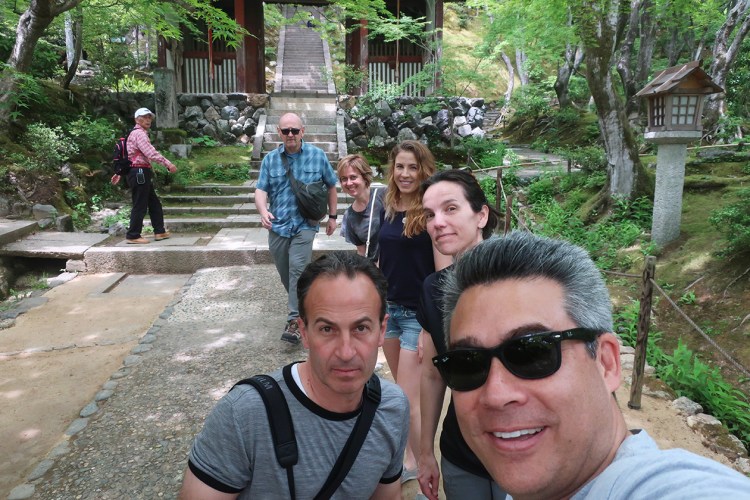
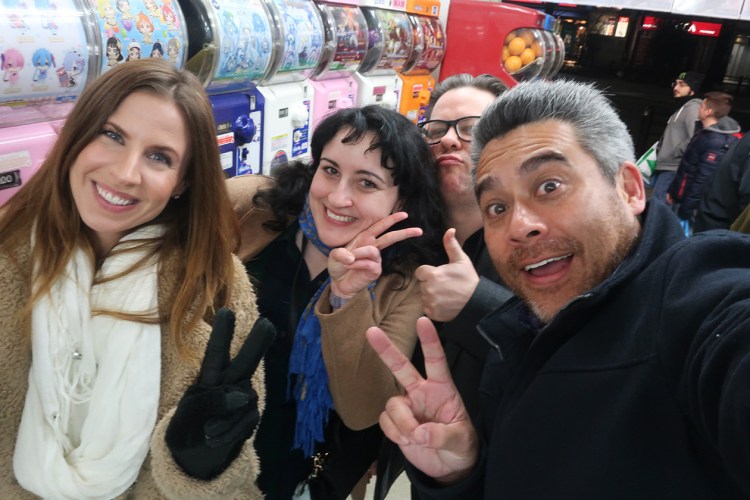
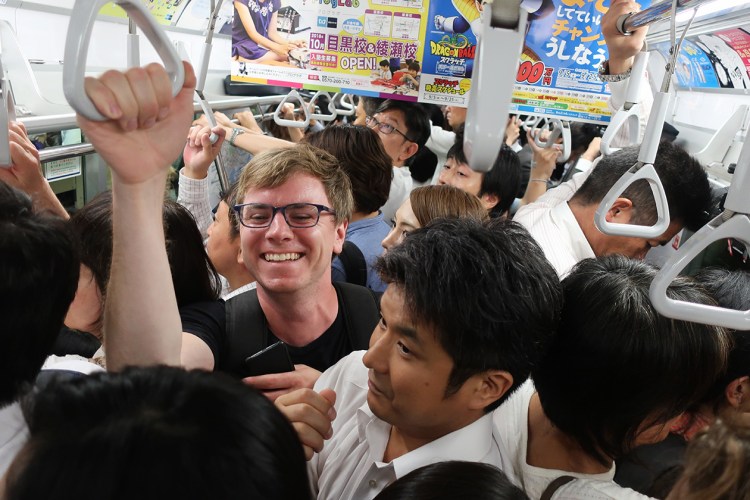
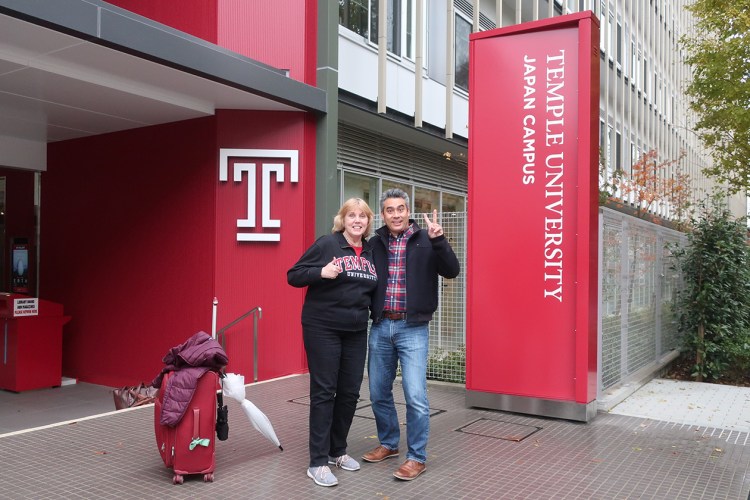
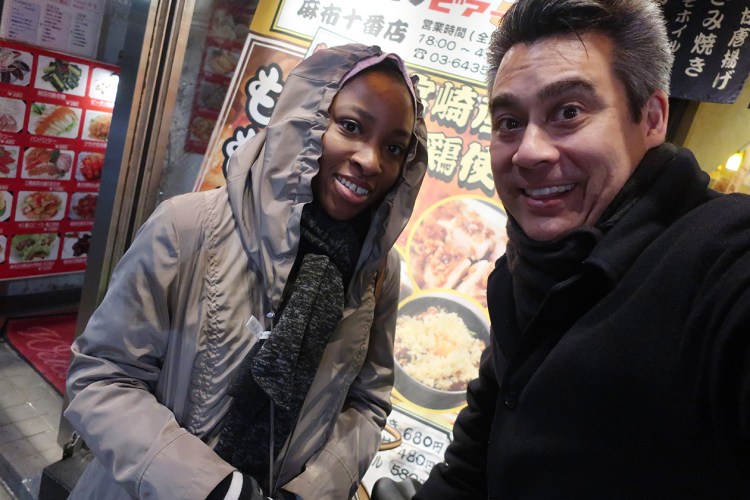
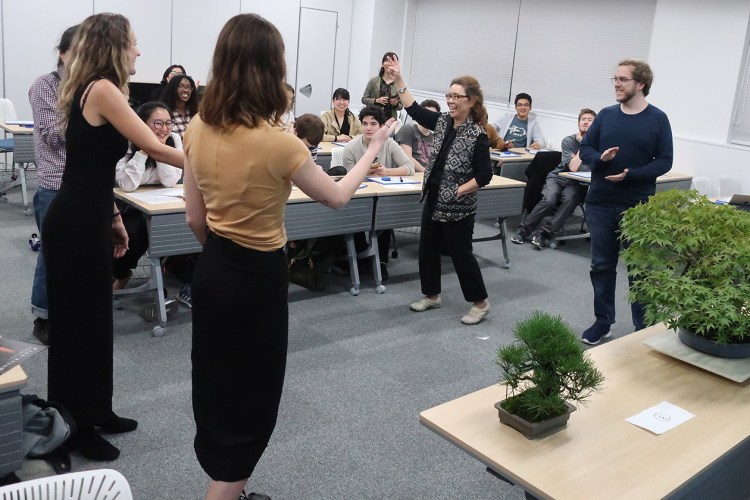
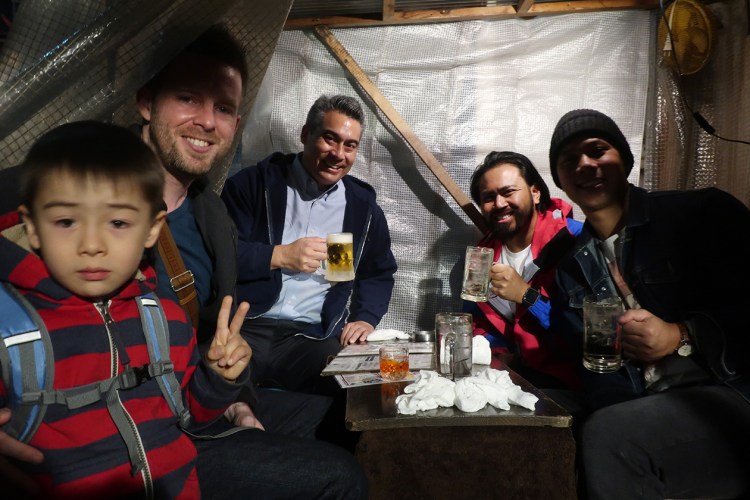
(side note: all the images here are from when back-home folks came to Japan).
We had so many visitors lined up to visit us in Tokyo that we moved to a new home – closer to the new TUJ campus, with three bedrooms. We had plenty of space and plans to use it.
Then the pandemic hit.
On February 28, 2020, TUJ was forced to go fully-online for a few weeks as a precaution against COVID19. I held a meeting for faculty that Friday afternoon and prepped them for what would come the following Monday: Zoom, Canvas, discussion boards and lots of email.
It was a whole new world for the campus that was previously rather technology-averse.
While I think I had made a small impact on the campus prior, it was during the pandemic when I could really make a difference.
The online experience revealed the flaws at the campus – the heavy use of lecturing in classes, the reliance upon paper for, well, everything, the internal communication difficulties in general, and the overall lack of a sense of community, amongst other things.
I began hosting weekly open Zoom sessions with students just to chat about life, and I communicated frequently with staff and faculty. I learned what people wanted and needed as we navigated the uncharted waters.
In all the interactions, I tried to stay calm and compassionate, being understanding and lenient while not lowering our academic standards.
I paid a few faculty members to create guides for online education so that the faculty would be able to learn from their peers. We invited TUJ professors who were experimenting with new approaches to present their techniques to the rest of the faculty. I encouraged faculty to participate in the workshops offered by the main campus’ Center for the Advancement of Teaching. I dropped pedagogy tips into every faculty and staff meeting, priming everyone to think differently, challenging them to think student-first.
For the 2020-2021 budget, I assumed we’d have a 15-percent drop in revenue based upon a drop in enrollment caused by the pandemic. But the students stayed. And new students arrived. We were able to register students from around the world even though they could only participate in classes virtually.
Summer and fall 2020 enrollments were stable, as was spring 2021. We weren’t far from our all-time highs in total numbers of undergraduate students. During the summer of 2021, we set a record for number of students in the summer semester despite international students not being allowed into Japan because of travel restrictions.
The faculty had adapted beautifully to the new delivery system and students were adequately satisfied with their education.
The revenue flowed and the campus exceeded budget expectations by far.
The difficulty was that because of the pandemic, most of the old distractions from work were eliminated. Michelle and I continued to go on bicycle and walking adventures but we rarely saw friends anymore. Festivals were canceled. We avoided restaurants and bars. I worked all day and night, responding to emails at all hours.
Keeping students, staff and faculty calm despite the difficulties brought on by the pandemic was time-consuming. I Zoomed with so many people who just needed to vent.
While absorbing all that, I was also doing my normal work, and battling the regular forces at the campus – the shoganai culture, the lingering crisis-mode mentality, the people telling me that I didn’t understand the TUJ way, etc.
By the time my two-year contract extension was presented to me in April, I was mentally spent. And when I saw that the offer did not include a raise after three years without one, I declined. Rather than feel unappreciated, I’d take the sabbatical I deferred when I came to Japan. I’d return to Philadelphia, even though it meant taking a 60 percent pay cut.
So what did I learn?
I like helping people. I like to identify ways we can evolve, and then work with people to make those changes happen. I like presenting new ideas and shaking things up. Shoot, I especially like acknowledging people’s great ideas and empowering them to realize them. I despise bureaucracy and the stymying of innovation that comes with institutional logic.
I found it was often more beneficial to take the blame for minor mistakes rather than let others shoulder the burden, even though I wasn’t at fault. The stuff that would roll off my back might stick to others, and that wouldn’t be good.
I am a man with principles and I stand by them. I knew that but it was tested regularly in the position.
I’ve always known I think big but the scope grew because of the opportunities that TUJ posed. That campus can help change Japan, a country that is aging fast and largely still trapped in the mentality of the 1960s, and we could help guide the world through coming difficulties.
TUJ could lead the change in how women are treated in Japan. We could be a model for inclusivity. We could help change the way higher education in Japan operates (which is largely via the sage-on-the-stage style), and build an appreciation for critical thinking.
We could also take the best of Japan and introduce those things to the world, like the fundamental concepts of prioritizing community over the individual, and the emphasis on personal responsibility. The lessons learned in Japan about the aging population, for example, could be applied around the world, where similar demographics will create similar problems in the coming years.
I developed a class that discussed such ideas and I was working with people to create a project devoted to gender equality and empowerment in Japan.
Big things were coming.
I don’t know what comes next for me. I’m now on sabbatical and enjoying the time away from the daily grind. I had no idea how stressed out I was until I eliminated that stress.
I have a lot of homework to do for my grad program but I find time to lounge in the pool almost every day. It’s glorious.
We are expecting a child any day now and he will likely dictate our future.
I can’t wait to take him to Japan, especially when he is old enough to appreciate the place. Japan and its culture will be a big part of his character, as it remains a huge part of mine. I will teach him about humility, community, family and tradition.
I’m so happy I had that time in Japan. We made the most of it, I think.
I will continue enjoying every minute of life. It’s exciting to know that things will only get better.
 G.W. Miller III
2 thoughts on “Three Years in Japan”