As long as the course learning goals remain the same, planning for online teaching may not be so different from planning for an in-person course.
The primary difference, however, is in the need to be more intentional and explicit in course delivery and in communicating expectations.
Where do I start?
Begin at the end.
Use the principles of backward design to ensure that the course content is aligned with the course learning goals. What are the knowledge and skills that your students should demonstrate by the end of the course? Those are the course goals and outcomes. Build your course around them.
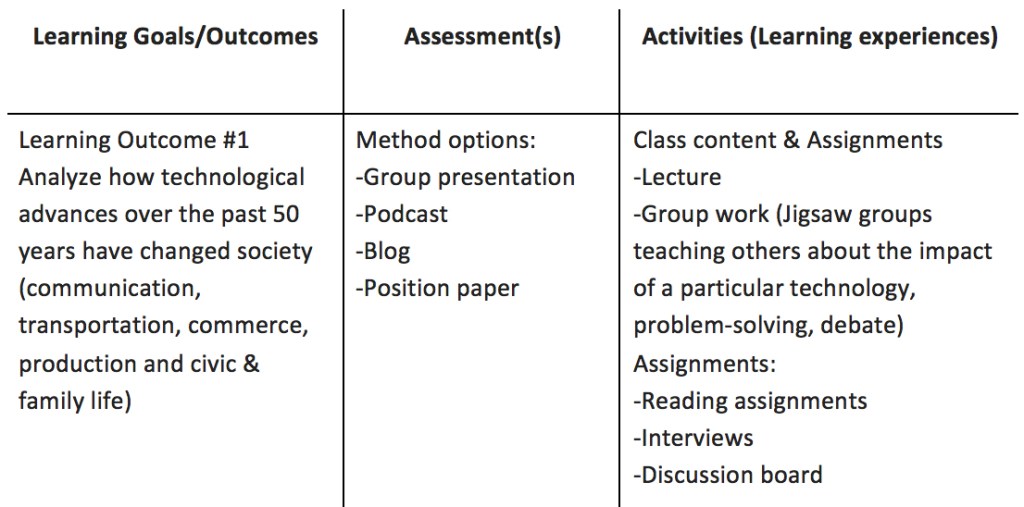
1. Learning Goals/Outcomes: First identify the knowledge and skills students will demonstrate at the end of each unit or by the end of the course.
2. Assessments: Next, think about summative assessments (e.g. test, paper, presentation, etc.) and the knowledge and skills that students will be assessed on.
3. Activities: Then, plan the learning experiences that will help students grasp and practice the given knowledge or skills.
4. Tools: Finally, choose the tools that will best facilitate the learning experiences that students need to have.
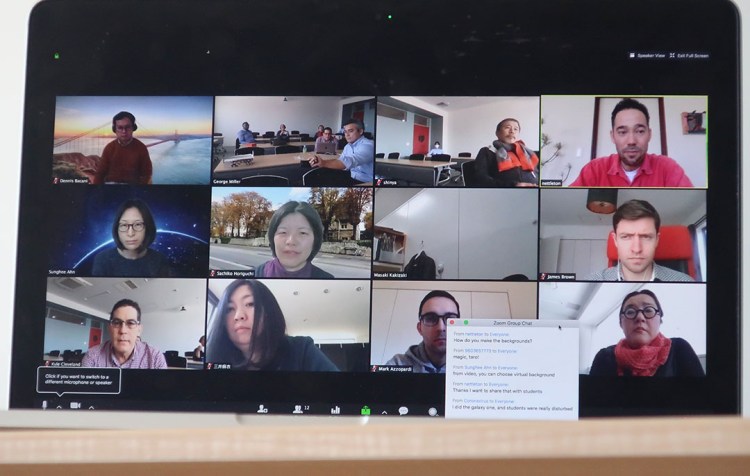
Plan ahead, now: How much of live zoom? How much of asynchronous activities?
Going through steps 1 through 4 will help you estimate the number of live zoom classes needed on a weekly basis and how much time you expect students to dedicate to asynchronous activities.
Such information should be communicated upfront in a tentative course schedule in the syllabus and made clear to students at the beginning of the semester. Explicit communication of expectations, well-established routines, and regular reminders are foundational to a successful online course.
Example: Planning around learning goals/outcomes
Course: Technology and Society
Consider learning goals first, not tools first.
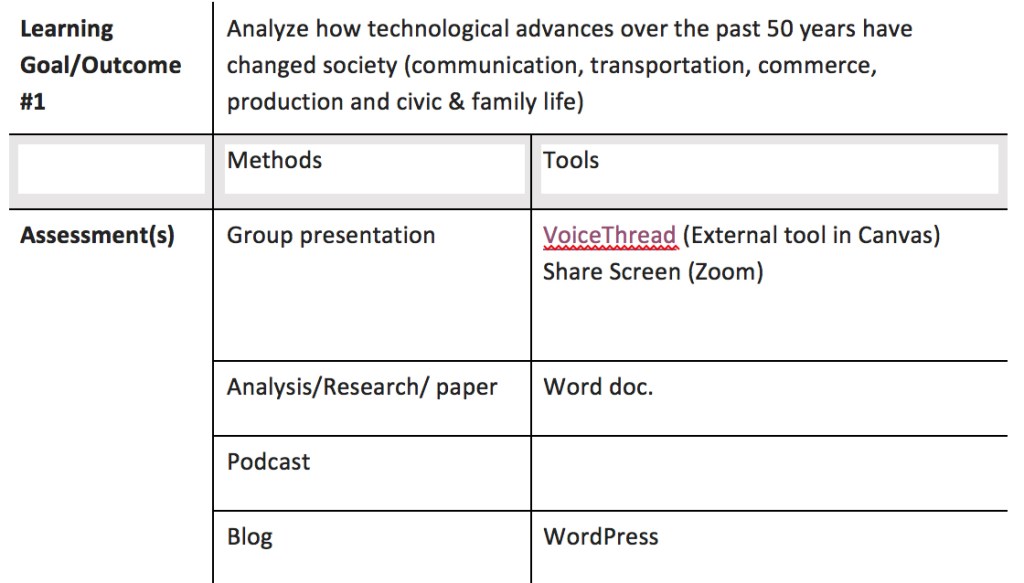
Yes, the online environment affords a variety of exciting tools, but decide which tools will best support a particular learning experience, not the other way around.
Example: Choosing useful tools/formats for the learning activities.

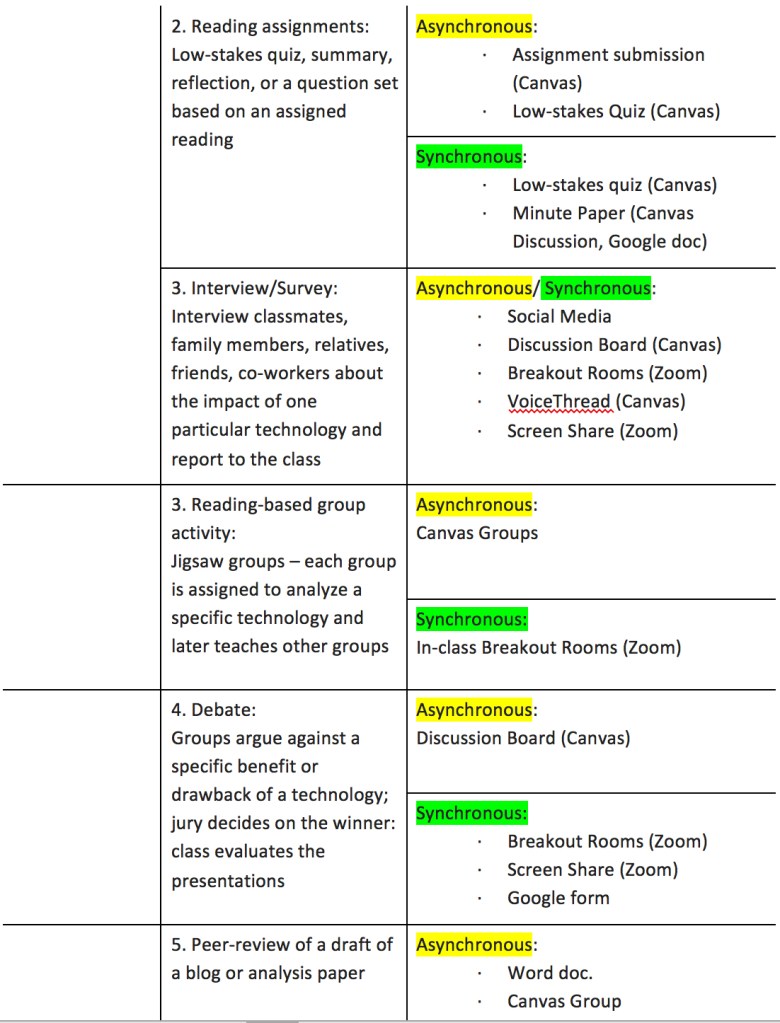
Create a variety of interactions and feedback.
Consider a student-centered approach to selecting activities:

To support students’ attainment of the learning goals, create opportunities for students to receive constructive feedback after each activity. The feedback can be provided through the use of a rubric and through peer or instructor comments.
Avoid burnout from responding to everything that students submit. Create a clear rubric for assignments that helps indicate the quality of the work and how it can further develop.
Students can use the rubric to self-assess as well as to comment on and evaluate one another’s work.
Also, create opportunities for students to receive substantive feedback from the instructor on the more involved assessments.
Find alternative assessment ideas here.
See more learning activities here.
TIP: Create a more generalized syllabus where you list projects and assignments but do not potentially peg coursework to specific dates. This opens up flexibility in how you can teach your class.
Rubrics & Guides
Sample Discussion Board Rubric

Information gathered by Sunghee Ahn, Dennis Bacani, Ian Lynam, George Miller, Mariko Nagai and Makoto Negishi, April 2020. Images by George Miller. Art by Ian Lynam.
 G.W. Miller III