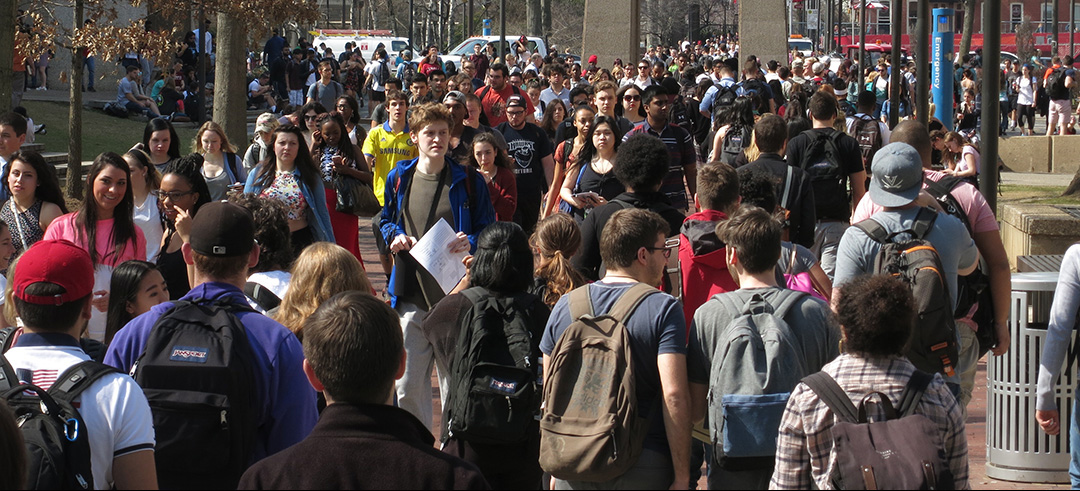
My college roommates and I used to joke that our college campus was like a country club.
There were multiple restaurants with impressive buffets, several workout facilities – including a world-class pool and pristine basketball court, green grass everywhere and people who tended to all our needs.
It all seemed so excessive at the time.
And that was 30 years ago.
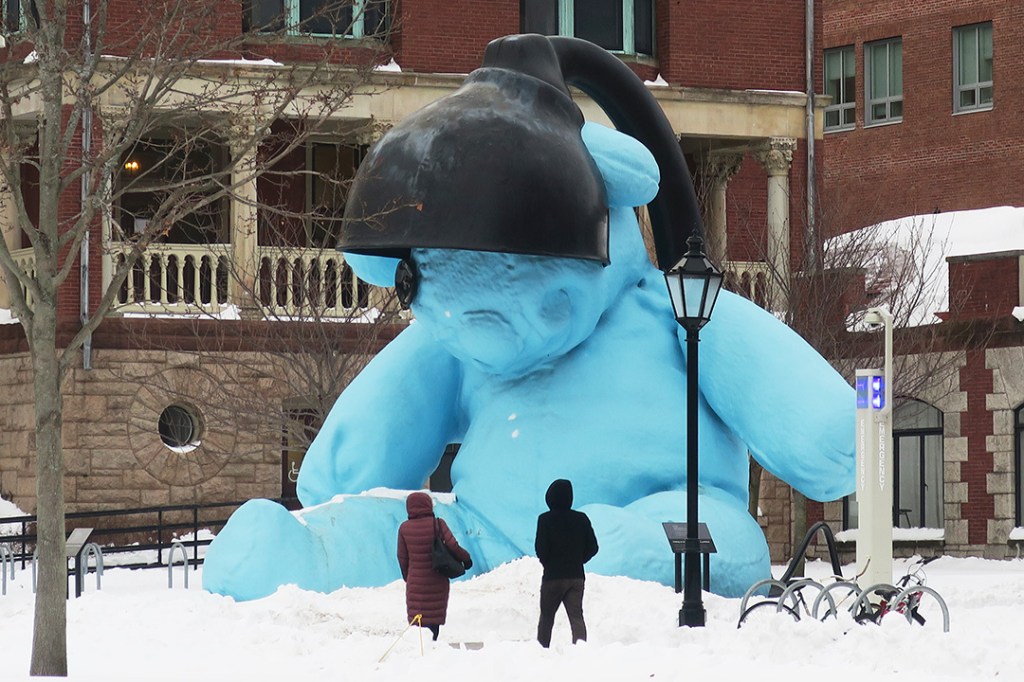
Colleges these days have rock climbing walls, lazy rivers, massive art installations and LEED-certified dorms that feature amazing views, flat-screen TVs, video games and private bathrooms.
I suppose the argument for the lavish amenities is that competition for students is fierce and will only get more fierce as we approach the looming demographic cliff that is the declining number of traditional college-age students worldwide. Universities need to draw and retain students in order to, well, stay in business.
But what is that business that puts so many young people into boatloads of debt? The myth of upward mobility?
Can that business model survive the global epidemic?
I don’t think so. And that’s going to be good for everyone.
Forgive me. That sounded callous.
The reality is that the pandemic will force many schools to shut down completely, and thousands upon thousands of people will lose their jobs. Beloved institutions will cease to exist. Communities that supported those institutions, and who were well-served by them, will suffer.
Things will be difficult for the survivors, as well, as building trust and proving value again will take time. Hiring freezes have already been enacted and furloughs have been issued. Layoffs and pay cuts are just around the corner.
The next few years will be hard for all. The pandemic knows no mercy.
But as we rebuild higher education, it is absolutely essential that we don’t recreate what existed in February 2020, before the world forever changed.
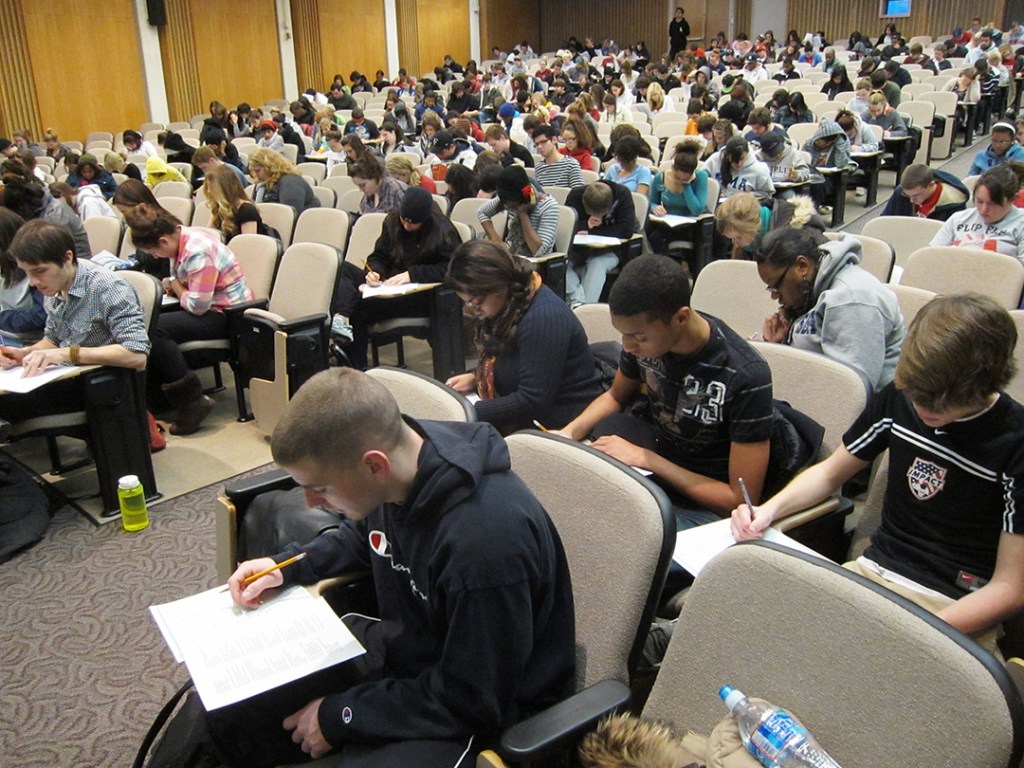
Every semester in Journalism & Society, which usually had between 200 and 300 people, I’d ask, “Why are you here?”
I’d run through a few options – to learn, to get a job, because college is a pathway to success, because college is the path to wealth, etc. While students often acknowledged multiple options, the option that received the most hands up was always that college is the path to success.
That’s generations and generations of development of a societal norm, which was likely born with the creation of the GI Bill in 1944. Because the cost of college for veterans and dependents was subsidized by the government, college became the path for many whose families had struggled during the Depression and during the war years.
Higher education, which had previously been the realm of the fortunate and the elite, exploded after World War II. Prior to 1940, total enrollment at American universities was around 1.5 million students. By 1969, there were more than 8 million students. By 1985, there were more than 12 million. And at the start of the current academic year, there were nearly 20 million Americans attending college.
That’s a lot of folks spending an average of $23,000 per year for tuition, fees and room and board in an environment where faculty are more rewarded for their research than their teaching. The average cost of a college degree (tuition, fees, room and board) now is nearly three times higher than when I was in college.
And that means that there is money to be made in education – for some folks, at least. In 2010, there was only one university executive in the United States with an overall compensation package of more than $1 million per year. By 2018, there were 17 presidents or chancellors earning more than $1 million annually.
By contrast, students are now leaving college with more debt than ever before, with the average student entering the workforce owing more than $29,000. That’s 60 percent more debt than people left college with when I finished my undergraduate studies in 1993.
Much of that is because universities have heavily recruited out-of-state students who pay higher tuition, a practice created after states started cutting funding for public universities.
The anger toward universities is real. The movement was gaining traction well before COVID19 came along and it is only worse now that institutions around the world are teaching online, which many students feel is an inferior product.
The confluence of high costs, grim job prospects and a world of uncertainty will mean that students will start avoiding college for now. We have no idea if they will ever come back.
If you believe that an educated society is good for all, we have to act now.
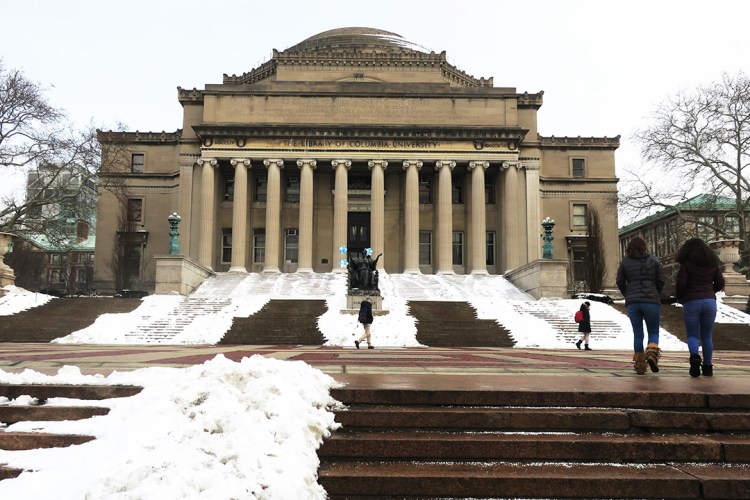
There’s one other big thing that stands in the way: The fact that some people see universities as places where arrogant people in ivory towers look down and laugh at the locals.
That idea existed abroad for centuries and continued in the United States, especially after the Morrill Land Grant Acts plopped universities in the middle of rural communities. That lead to a litany of movies about the clashes between college richies and local yokels.
With the increasing number of students after World War II, college campuses expanded, often eating up land once occupied by working class folks. Many schools walled themselves off from their surrounding communities, barricading themselves from their neighbors.
These days, the relationships between universities and their surrounding communities is often tense, as the distrust remains. It’s gotten so bad in some places that even when universities try to do good stuff, it is received with scorn.
And that is so sad.
In an era when our politicians fail us, you’d hope that people could rely upon academics to lead the way. They have objective, scientifically-backed knowledge. We should trust them.
But decades of focusing on the business of education (plus the politicization of teaching) have eroded public faith in educators.
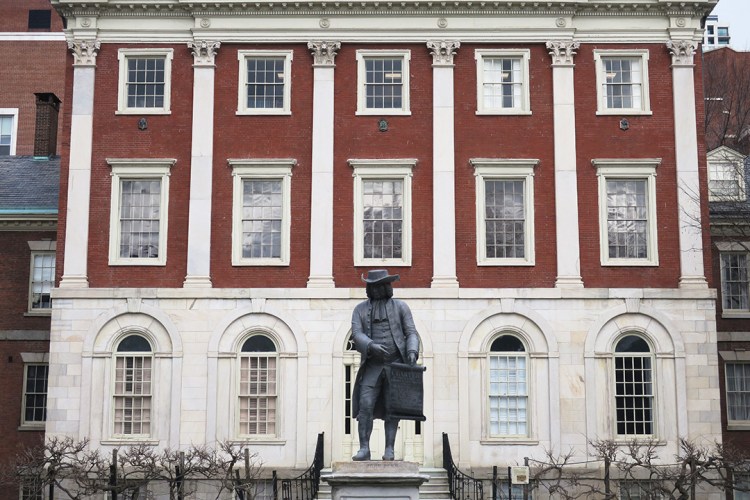
So how do universities build trust, continue to educate and sustain themselves now and into the post-COVID19 world? This is what I would do:
• Reduce tuition.
Colleges are already estimating enrollment slumps of up to 40 percent for the fall semester. Some students can’t travel to their schools and others are worried about spending so much money during an economic crisis. There are also students wanting to sit out the online-only (or intermittently online) learning.
Discounting tuition now might bring some of those students back into the system.
It would be a way for universities to create the perception that they’ve listened to the concerns of students. A ten percent reduction would make schools look magnanimous when in actuality, it’s just smart business. If you reduce the estimated enrollment drop to 30 rather than 40 percent, those additional students would more than offset the discounted tuition, and it would keep students in the system longterm.
When the world starts returning to normal, that discounted tuition rate could continue for online classes, a lingering enticement to students.
• Think regionally.
Travel restrictions over the next year or two will make it difficult for students to stray far from home. This means that colleges should mine their local communities and regions.
This is a good first step, I think. While the idea of an education should be universal and all students should at some point see the world beyond their local areas, attending a hometown school can still be a stimulating and enriching experience.
Thinking regionally will mean that higher education institutions should invest in area public schools, as that is their feeder system. If that happens, you create a grand education ecosystem, and everyone benefits.
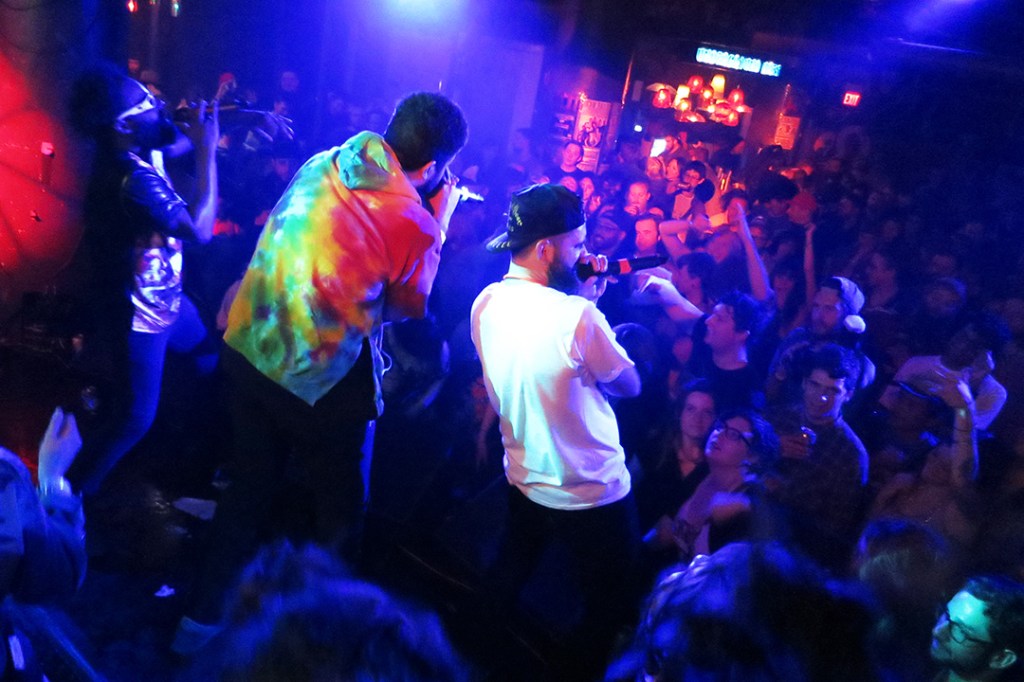
• Build community.
I’ve talked about the importance of creating a lifelong learning community before. But we need to further define the university community to also include the geographic community, as listed above.
Many university-community partnerships exist. But most run parallel to the academics at institutions. They are not integrated into the curriculum.
Bridging academics with things happening in the community allows students to get hands-on experience while providing a public service. Using the region as a laboratory for learning is advantageous for all involved, including researchers, who gain amazing access.
• Put a greater emphasis on career prep.
I’ve always despised the idea of going to college in order to get a job. It seems to miss the grander purpose of college, which is to learn about the world.
Rather than learning how to do one job, students are supposed to learn about a world of jobs that exist, and the concepts behind them. As W.E.B. Du Bois wrote, “I insist that the object of all true education is not to make men carpenters, it is to make carpenters men.”
But people already think of college as a path to a career. During this economic crunch, people will only become even more pragmatic .
So, if that is what is needed, let’s do it. Let’s draw people in with talk of how to jumpstart careers.
This happens a lot already, of course, but it’s almost downplayed, as academics don’t want to be so pandering.
We’ll continue with the broad-based core education, balancing out the career-focused stuff. We just change the messaging to focus on the student’s job prospects.
• Be of service.
When I taught on Temple’s main campus, I spoke at events and volunteered my efforts whenever anyone asked. As the university of the city, which receives public funding, I thought of myself as working for the people. So, I spoke at high schools and community organizations and I attended community workshops and everything else. It was my job.
The more we make ourselves available to the public, the more people realize that we are there to serve. And the more they start to trust and appreciate us.
Let’s bring back the idea of the public intellectual, the person known for being thought-provoking but accessible. You know, take that dense, abstract research that academics do and make it something that would be of value to everyday folks.
Wouldn’t it be amazing if this all spiraled upwards and people started to admire intelligence as much as they revere money, athleticism and good looks?
OK. I need to stop. I’ve gone too far.
Taking these steps would help higher education institutions move forward after what will be a brutal period.
The reality is that these things should be happening anyway. The higher education system needs changing. Universities should be seen as community assets, not as threats.
The business of higher education needs to be the actual education. The business only succeeds if the students succeed. We don’t need to lavish people with fantastic amenities. We need to give them rigorous academic experiences that open their minds and prepare them for the challenges the world will throw at them. We need to pay for excellent faculty while keeping tuition affordable. We need to refocus on the mission of universities, not the bottom lines.
If you build a student-centric learning environment focused on quantifiable student success, more students will come.
The pandemic will force changes that likely would not have happened for a while, if ever.
If university officials and academics play this right, they could come out of this as the true leaders for the future.
 G.W. Miller III
One thought on “The Pandemic Will Be Good for Colleges (Eventually)”