
When I arrived at the Temple University campus in Japan, the school operated out of three buildings, all of which were actually office buildings that had been converted for use as classrooms, faculty offices and administrative offices.
The main building, Azabu Hall, had thin walls where laughter, applause, yelling and everything else could be heard from room to room. The other building where classes were held, Mita Hall, was just as cacophonous. I rarely went to the third building, which was simply dubbed “the annex.”
All three buildings were cramped and dingy, with few comfortable places for students (or anyone else) to hang out.
So, when the students were done with their courses, they usually bounced.
It was difficult to build community in those buildings, as there were few spaces where students could convene, share ideas, or mix and mingle with professors, staff, alumni or anyone else.

In August 2019, we moved across town, into a new, more spacious building that featured a huge student lounge, beautiful art studios and a large grass field. There were places students could sit with their friends to study, create and chill out.
All of the sudden, students wanted to come to school every day – and they stayed until we kicked them out at 11 pm.
The new building became a focal point. It was a place where we built community, on every possible level.

And then, on February 28, we learned that the Japan Campus had to go online-only due to the fast-moving coronavirus that was spreading around the world.
That changed everything.
The entire university community is now communicating virtually. Classes are online, staff meetings are held via Zoom and interviews for open positions are being done remotely.
We are an operational institution but the vibrancy is gone.
The reality is that a lot of education could go all online and likely be just as effective, if not more so. There will always be classes that are better-suited to the in-person format but being online can reduce costs and it allows students to take control of their education. In theory, online students can set their own schedules (with asynchronous classes) and they can do it from anywhere they want.
The purpose of attending college is to learn about the world and develop the skills that will help you lead a happy, prosperous life, and become a contributing member of society. Such goals can be achieved via online learning.
But when students learn online, they are largely alone, or at least separated from their classmates. They have to self-motivate, self-challenge and overall take on the onus of learning, which sounds odd but it’s true. There are no classmates or teachers prodding students to strive. They have to do it all themselves, for the most part.
By being apart, we lose our sense of community.
And that is massive.


From the student perspective, not developing that level of community means many will struggle, and some will not succeed. And they may not ever again have the opportunity to organically build that long-term support system – universities are those rare places where we are subjected to so many people from so many places, with a diversity of interests and aspirations.
From a university perspective, not building that community when students are undergraduates means that after they graduate, we could lose them forever.
The future of higher education will be about more than the four or five years when students are doing their undergraduate work. The value in getting that degree is in developing a lifelong learning community, a long-term network that will support people throughout their entire lives. The elite schools recognized this long ago. Other universities have active alumni groups around the world that help fulfill similar missions.
The importance of these communities will become invaluable as we tread through the difficult post-coronavirus era.
People attend college, graduate and move on to start their careers. They should remain a part of the university family as mentors to the current students.
They should share their stories and inspire the younger generation, who appreciate learning from people who were in their seats just years before. Graduates should stay involved, maybe attending grad school or continuing education courses, further developing skills and connections. They should list jobs when they know about stuff, and seek out fellow alumni, as they know the quality of people who graduated from the school.
They should donate money and help fundraise, as the health of the university and the strength of the incoming students only makes earned degrees more valuable to alumni.
These things create upward spirals, with everyone benefiting.
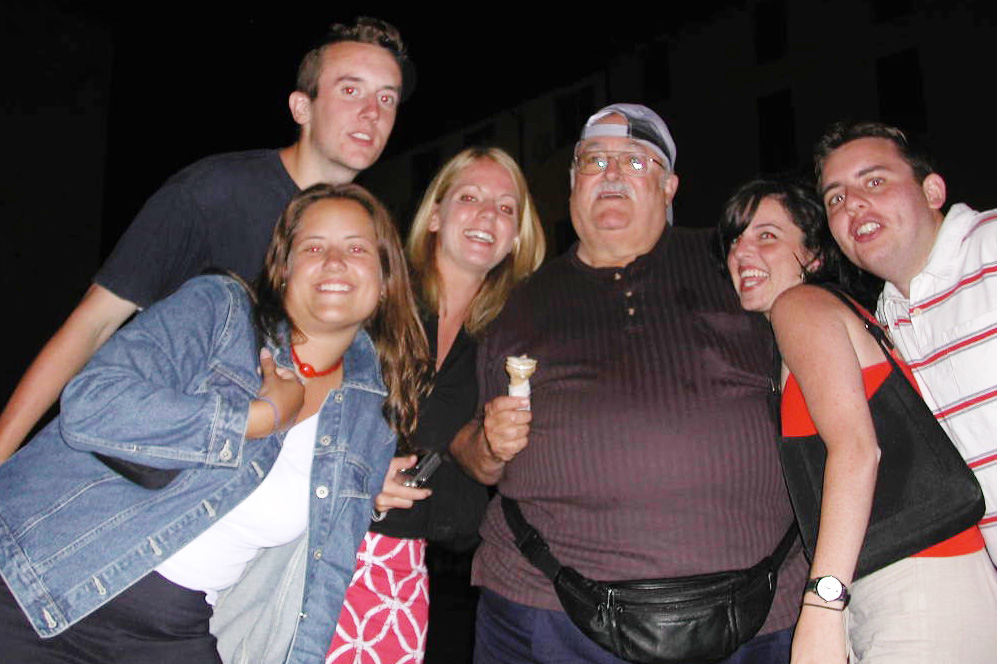
Much of my success in life is due to one connection I made when I was an undergrad. One of my journalism professors, Andy Ciofalo (above, center), encouraged me to attend his alma mater for graduate school, which I eventually did. That led me to start teaching.
He hired me to teach in Italy a decade after I graduated from Loyola, and then hired me as an adjunct at Loyola.
All that experience helped me land my full-time gig at Temple.
I’ve tried to be as supportive of my current and former students as Andy was with me.
For example, I met one of my buddies when he was my student more than a decade ago. After he graduated, he joined my softball team, which was based out of the newspaper where I worked before becoming a professor. He eventually started working at the newspaper, too.
When I got married last year, he gave one of the two wedding toasts.

I am very concerned about how higher education institutions will survive the global pandemic. I fear that some colleges will shut down and others will scale back faculty and staff. Some of this is starting to happen.
We were already bracing for a global shortage of traditional college-age students in the next few years. And there has been growing disdain because of the steep cost of getting a college degree. Now you’ve got a global economic crisis, with millions of people newly unemployed and no idea about when we will return to any level of normalcy.
To some, going to college already seems like an expensive luxury. The animosity will only grow.
We need to prove our value. Like, now.
But how do we do that in the age of online learning, when we can’t build that face-to-face community?
Here are a few things:
• We need to be in regular communication. We don’t need the 21st century version of Franklin D. Roosevelt’s fireside chats, as we live in an interactive world.
Instead, we need communication that fosters relationships and invites participation.
The world really doesn’t need another social media outlet. But social media outlets can be places where we share ideas, images, art, life updates and everything else. In a time of global isolation, social media is the easiest way to communicate with the masses.
Plus, people do need constant updates and occasional comforting. And they need the ability to ask questions and make suggestions.
Honesty, transparency and understanding must be the characteristics of all communication.
I mean, this is Crisis Management 101 but still, not everyone does this and some do it poorly.
• We should be leaders, putting out messages and leading conversations that people can learn from. You know, podcasts and videos and even webpages with relevant content.
• We need to champion the work of our faculty, staff and students. We are thinking and creating and that work should be broadcast to the world.
We should also show off the amazing stuff that our alumni are doing.

• We should offer some classes online for free, showing that we care about education.
For example, this summer, I’m going to assign some of our Japanese language faculty to create a series of videos that present basic Japanese language skills. They will make videos that teach the language while talking about practical things, like job hunting, dating, apartment hunting, shopping, etc. These videos won’t necessarily complement classes but they will supplement learning, presenting real life scenarios that students – and anyone with an Internet connection – can emulate.
• We need to create online channels for students and alumni to communicate without the school organizing or monitoring activity. This is where we need the alumni to get engaged (maybe we invite them to attend online classes for free?).
This requires grads to have a sense of ownership of the institution, and a stake in seeing the place succeed. This is a tough one to build from scratch.
Will these things hold off the pain that is going to hit the world of higher education?
Likely only a little. But these are all things we should be doing, all the time. We need to be prepared for the recovery period and that starts by building community online now.
If we can create even one-tenth of the energy created by in-person activity, imagine how exciting things will be when everyone comes together again once the pandemic subsides.
Build the community now as best as we can and get them excited for the glorious celebration that will follow.
 G.W. Miller III
One thought on “Now How Do You Build the University Community?”